Who Owns the Hours? Audemars Piguet and the Art of Manufacturing Time
Design & Collecting
A watch measures seconds, but a luxury brand manufactures something larger: authorship, scarcity and cultural time. Inside Audemars Piguet’s radical return to collective craft.
Viacheslav Munister · 2026-09-29
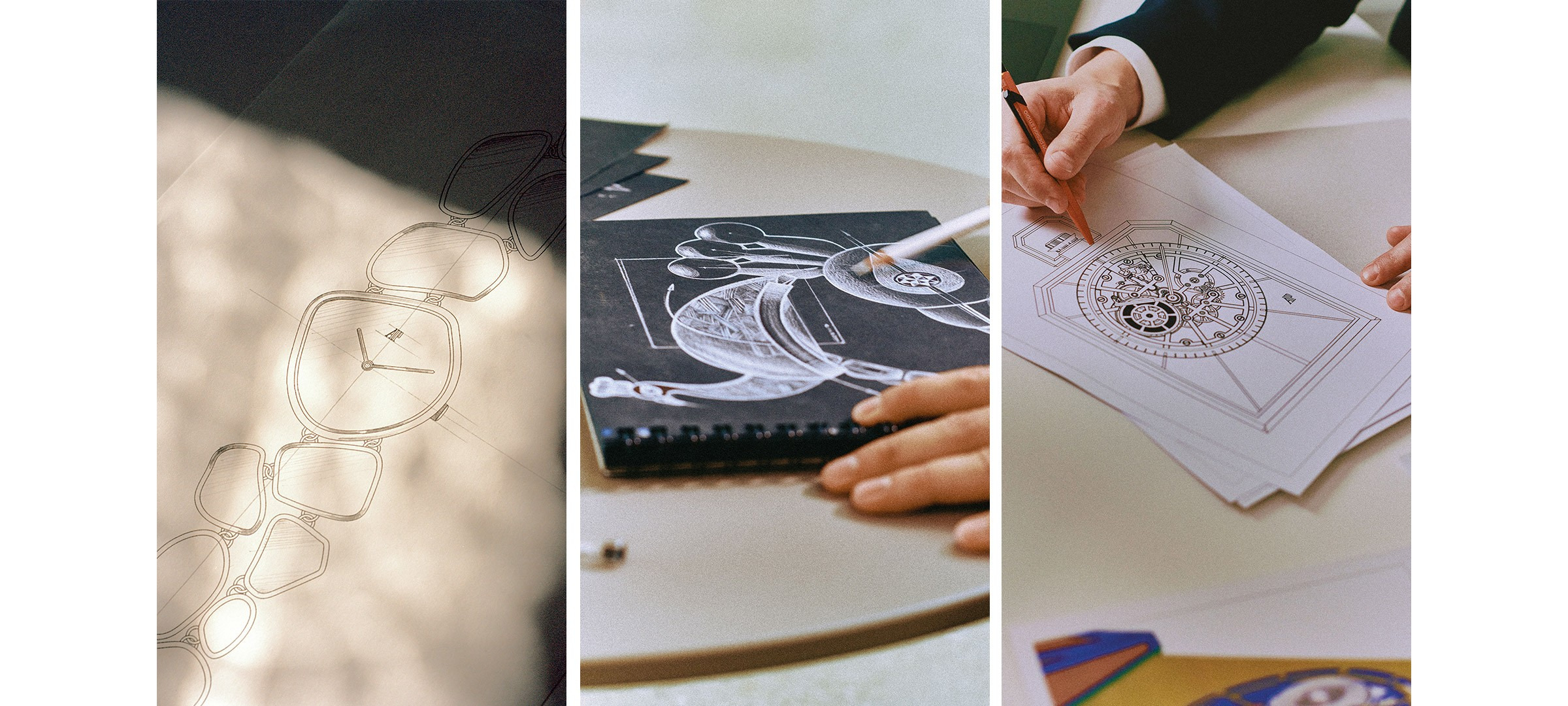
A mechanical watch is an absurd object in the most productive sense of the word. The telephone in a pocket measures time more accurately, updates itself automatically and costs a fraction of a complicated movement. Yet collectors wait years and spend fortunes for a machine that gains or loses seconds. Its value begins precisely where utility ends.
Audemars Piguet understands this paradox better than almost any modern watchmaker. The company does not simply sell instruments that tell time. It constructs a cultural system in which steel can behave like a precious metal, hand-finishing becomes evidence of authorship, scarcity becomes desire, a museum becomes a movement, and contemporary art teaches the brand how to speak beyond the wrist.
I · The product that cannot justify itself by function
Luxury watches are often described as art because they are difficult to make. Difficulty alone is not enough. A jet engine is difficult; a medical scanner is difficult. Art enters when technical labour is made available for contemplation – when a solution exceeds its practical task and begins to organise attention, memory and interpretation.
The decisive material in watchmaking is therefore not gold, ceramic or steel. It is time twice over: the time indicated by the hands and the time sedimented in the object. Polishing a bevel nobody will see, adjusting a repeater by ear, or cutting a stone to fit one irregular link converts hours of labour into an almost invisible surplus. The collector purchases condensed duration.
The first century: complexity before the icon
Audemars Piguet began in 1875, when Jules Louis Audemars and Edward Auguste Piguet established their workshop in Le Brassus. The location was not picturesque branding invented later. The Vallée de Joux had developed a dispersed economy of highly specialised makers whose long winters encouraged domestic precision work. The company emerged from that network rather than from a modern factory system.
From 1882 onward, grande complication work became a continuous thread through periods when such objects had almost no rational commercial future. A grande complication combines several demanding functions – traditionally a calendar, chronograph and chiming mechanism – inside one coordinated movement. Its significance is not the number of functions but their negotiation for space, energy and reliability.
The 1899 Universelle pocket watch, now positioned at the centre of the Musée Atelier, condensed nineteen complications and 1,168 components into one object. It established an enduring AP strategy: technical density becomes cultural authority when the mechanism can be narrated as the limit of what a generation knows how to make.
II · Royal Oak: when steel became an argument
The Royal Oak, launched in 1972 from Gérald Genta’s design, remains Audemars Piguet’s central act of cultural engineering. Its 39-millimetre body was large for the period; the octagonal bezel, eight visible screws, integrated bracelet and patterned dial refused the discreet codes of traditional luxury. Most provocatively, it was executed in hand-finished stainless steel and positioned with the seriousness of gold.
This was not the elevation of cheap matter through marketing alone. Steel is unforgiving: alternating satin-brushed planes and polished bevels must remain exact across the case and every articulated bracelet link. The design makes finishing structural. Light travels across the watch and reveals any broken edge. Craft is no longer hidden inside the mechanism; it becomes the surface language.
Royal Oak’s great invention was conceptual. It separated preciousness from raw material and attached it to design, labour and controlled difficulty. The visible screw did not pretend the object had descended intact from heaven. It made assembly part of the image. Industrial signs became luxury because they were executed with jeweller-like discipline.
Finishing is not decoration
A movement can function before it is beautifully finished. Anglage, black polishing, circular graining and Geneva stripes do not necessarily make it keep better time. Their purpose is epistemic as much as aesthetic: they expose the maker’s control over surfaces at a scale where a fraction of a millimetre changes the reflection.
Anglage turns a sharp machined edge into an even, gleaming bevel. Interior angles are particularly revealing because a rotating industrial tool cannot form them cleanly; they must be approached by hand. Black polishing produces a plane so flat that it alternates between mirror brightness and apparent blackness according to the angle of light. The eye reads precision through behaviour, not ornament.
This is why transparent casebacks matter. They transform labour once reserved for a watchmaker’s bench into a spectacle for the owner. The movement is no longer only an engine. It is an exhibition whose smallest surfaces carry the proof of time spent.
III · The danger of becoming your own icon
An icon solves recognition and creates another problem: repetition. The Royal Oak silhouette is so legible that colour, complication, ceramic and celebrity collaboration can be placed inside it almost indefinitely. Commercially, this is extraordinary. Culturally, it risks reducing innovation to variations on a secure outline.
Audemars Piguet’s identity is therefore caught between dependence and escape. The brand must protect the object that made contemporary haute horlogerie possible while demonstrating that its imagination is larger than one octagon. The new Atelier des Établisseurs is the clearest attempt in years to reopen that space.
The calendar that remembers February
A perpetual calendar is a miniature model of an irregular human convention. It must distinguish 30-day months, 31-day months and February, then insert a leap day every four years without ordinary manual correction. In 1955 Audemars Piguet introduced the first wristwatch perpetual calendar to display the leap-year cycle, turning hidden calculation into readable information.
The complication is philosophically strange. The mechanism does not measure an astronomical truth directly; it mechanically remembers a calendar assembled through centuries of political and religious adjustment. A perpetual calendar is therefore a machine that performs culture as though culture were nature.
This distinction clarifies why watchmaking belongs in an art journal. Its highest achievements are not simply accurate. They materialise abstract systems – calendars, celestial cycles, elapsed intervals, musical sequences – and force them to coexist inside a wearable volume.
IV · 2026: the return of the établisseur
Before the vertically integrated manufacture became the dominant ideal, Swiss watchmaking depended on établissage : a network of specialised workshops coordinated by an établisseur. One maker produced an escapement, another a case, another a dial; the finished object was not the output of a single factory but the orchestration of distributed intelligence.
In 2026 Audemars Piguet revived that model inside the Musée Atelier at Le Brassus. The Atelier des Établisseurs connects the manufacture’s watchmakers with independent engravers, enamel specialists, skeletonisers, gem-setters, lapidaries, designers and precision engineers. The radical gesture is not nostalgia. It is credit: the principal artisans behind each object are named.
That change matters because luxury usually performs collective labour as singular brand authorship. Hundreds of hands disappear beneath a logo. By restoring names to the network, AP moves closer to the credit structures of film, architecture and contemporary art – fields in which authorship remains unequal, but collaboration can at least become visible.
Calibre 3098: engineering an asymmetry
The Galets case is not a conventional round housing given a decorative outline. Its asymmetry obliges the calibre to answer the case. Calibre 3098 was developed from the historical 3090 architecture and reshaped so that movement, case and stone composition share the same off-centre logic.
A balance oscillates at one end of this miniature landscape while bridges distribute support across the available volume. Hand-grained surfaces and chamfered edges make the movement legible without forcing it into bilateral symmetry. The achievement is integration: engineering does not correct the designer after the fact; it participates in the form.
V · Galets: nature disciplined without becoming uniform
Établisseurs Galets uses turquoise and tiger’s eye for its dial and bracelet links. Each stone carries veining, density and colour that cannot be perfectly repeated. Its pebble-like geometry refers to the shores of the Lac de Joux, but the important fact is technical: irregular mineral matter must be cut into an exact wearable system.
The watch stages a negotiation between uniqueness and standard. Calibre 3098 is a contemporary movement developed for the piece; the asymmetric case and sapphire crystals require precise repeatability. Yet each arrangement of stone refuses total equivalence. Nature supplies difference, while craft gives difference a durable frame.
This is the opposite of merely decorating a familiar watch with an exotic dial. The oval case, the curved movement and the stone-set bracelet share one syntax. Material does not illustrate a story added by marketing. It changes the geometry of the object.
VI · Peacock: a secret watch and the theatre of disclosure
Établisseurs Peacock belongs to the history of the secret watch, in which the time display is concealed within a jewel. Designer Kenan Geraud’s peacock opens into colour; engraved wings, translucent enamel and articulated gold links transform checking the hour into a small performance.
The object refuses modern watchmaking’s obsession with instant legibility. Time must be revealed. That delay is not an inconvenience accidentally preserved from the nineteenth century; it is the work’s central choreography. The wearer activates the piece and momentarily becomes its performer.
Here the boundary between jewellery, automaton and watch collapses. Function remains, but it has been deliberately subordinated to encounter. One does not glance at Peacock. One enters its sequence.
VII · Nomade: time leaves the wrist
Établisseurs Nomade can operate as a pocket watch or a small table clock. This mobility recalls the long history before the wrist became time’s default address. It also shifts the object from accessory to sculpture: placed upright, it occupies a room and establishes a relationship with architecture.
Its skeletonised calibre exposes depth rather than merely removing material for visual drama. Bridges, voids and hand-finished edges compose a mechanical interior that changes with viewpoint. The watch does not carry a picture; the movement is the picture, and its subject is organised energy.
One watchmaker, one chain of responsibility
Each Établisseurs piece is assembled and adjusted by one master watchmaker. That continuity differs from a production line in which specialised operations pass anonymously from station to station. A single maker follows the behaviour of the movement through assembly, regulation and casing, accumulating knowledge of one object’s particular resistances.
Individual responsibility does not mean solitary creation. Galets depends on gemmologist and lapidary Mario Senape, specialist case makers, jewellers and movement constructors; Peacock brings together designer Kenan Geraud, engravers, enameller Vanessa Lecci and goldsmiths; Nomade requires stone cutting, skeletonisation and minute case tolerances. The single watchmaker is the final integrator of a visibly plural authorship.
The model resembles an orchestra more than the mythology of the lone artist. Specialisation increases difference, while coordination prevents difference from becoming noise. The brand’s meaningful role is not to claim every gesture as its own but to sustain the conditions under which the gestures can meet.
VIII · A museum shaped like a mainspring
Audemars Piguet’s most complete self-portrait is not a watch but a building. BIG’s glass spiral connects the founders’ 1868 house to the contemporary Musée Atelier. Visitors move clockwise toward the centre and unwind in the opposite direction, following a path modelled on a coiled spring.
The metaphor is unusually literal, yet the engineering prevents it from becoming stage scenery. A 470-ton steel roof is held by 108 unique curved glass panes, some composed of seven layers and reaching twelve centimetres in thickness. Structure performs the same trick as haute horlogerie: great force appears as precision, and precision appears as lightness.
Inside, approximately 300 watches sit beside live workshops for restoration, métiers d’art and grandes complications. The museum does not merely preserve completed masterpieces; it displays labour in progress. Brand history becomes present tense.
Architecture as a regulating mechanism
The Musée Atelier’s glass does structural and environmental work simultaneously. Curved panels carry the roof, admit the valley as a continuous horizon and are screened by a brass mesh that moderates light and temperature. The grass-covered steel roof adds thermal mass and manages rainwater. The apparently immaterial spiral is, in fact, a calibrated environmental machine.
Its exhibition route also manages narrative energy. Scenographer ATELIER BRÜCKNER conceived the displays as a musical score with interludes, crescendos and a climax around the Universelle. Time is not represented by a straight chronology alone. It is paced through compression, release and recurrence.
IX · When a brand becomes a curator
Audemars Piguet Contemporary has commissioned international artists since 2012. Crucially, the resulting works belong to the artists and enter their own practices rather than a corporate collection. Two in-house curators support projects from inception to exhibition, often with partner institutions.
The programme’s artists – including Cao Fei, Ryoji Ikeda, Alexandra Pirici, Tomás Saraceno, Sallisa Rosa, Yu Ji and others – are not selected to decorate boutiques with images of watches. Their works address data, ecology, performance, memory, sound and unstable material systems. The relationship to the brand is structural rather than iconographic: sustained production, technical ambition and the measurement of change.
X · Ryoji Ikeda: precision beyond comprehension
Ryoji Ikeda works with numerical data at scales the senses cannot assimilate. Points, frequencies and streams are subjected to extreme formal precision, yet the result is not clarity. It is sublimity: knowledge becomes so dense that it is experienced as light, vibration and vertigo.
The affinity with watchmaking is exact and dangerous. Both fields begin with measurement; both convert systems into perceptual form. But Ikeda’s work also reveals measurement’s limit. More data does not necessarily produce more understanding. A perfect instrument can confront us with our inability to read the world it quantifies.
XI · Alexandra Pirici: the body as an unstable archive
Alexandra Pirici’s practice seems to contradict the luxury watch. A watch promises a lasting object; performance persists through bodies, memory and reenactment. Pirici makes that opposition productive. Her living formations ask whether an archive can exist without freezing what it preserves.
For a company whose economic authority depends on durable objects and traceable provenance, supporting work that cannot be possessed in the same way is culturally significant. It allows the patronage programme to test a form of value that does not sit comfortably in a safe.
XII · Yu Ji: matter remembers pressure
Yu Ji’s sculpture brings the argument back to matter. Stone, concrete, metal and organic forms appear not as passive supplies but as substances with histories of pressure, extraction and weathering. Time is registered through fracture and accretion rather than hands on a dial.
This expands the brand’s preferred notion of craftsmanship. A perfectly finished watch tends to erase the violence of transformation: ore becomes alloy, stone becomes a component, abrasive labour becomes immaculate surface. Contemporary art can restore resistance to matter and ask what elegance has edited out.
What the commissions actually change
The strongest AP Contemporary projects do not translate watch components into enlarged sculpture. Ryoji Ikeda turns datasets into audiovisual environments whose precision exceeds comprehension. Alexandra Pirici uses living bodies to question whether memory requires an object. Yu Ji works with erosion and material fatigue. These practices complicate the brand’s own promises of permanence, mastery and possession.
Because the commissioned works remain the artists’ property, the programme avoids one common form of corporate extraction: funding a work and absorbing it permanently into a branded collection. The arrangement still produces cultural capital for AP, but it also permits the artwork to develop an institutional life beyond its sponsor.
That distinction is more consequential than visual alignment. Patronage becomes credible when it finances difference rather than demanding resemblance.
XIII · Patronage is never innocent
No luxury-funded art programme exists outside marketing. Cultural association transfers prestige; Art Basel access produces clients; the language of experimentation refreshes a heritage brand. Pretending otherwise would make criticism useless.
But commercial motive does not cancel cultural consequence. The relevant questions are more exact: Does the artist retain ownership? Is the work allowed to resist the sponsor’s image? Are curatorial decisions sustained beyond a campaign cycle? Does funding create work that would not otherwise exist? AP’s model earns attention because its commissions remain with artists and travel through institutions rather than functioning only as branded décor.
XIV · Scarcity, price and the aesthetics of waiting
The luxury watch market converts restricted supply into social energy. Waiting lists, allocation systems and auction premiums make access part of the object. Time is not only displayed by the watch; it is imposed on the buyer. Desire is administered through delay.
The ultra-limited Établisseurs pieces intensify that economy, but they also expose its material basis. Each watch takes weeks and depends on specialists whose capacity cannot be scaled without changing the work. Scarcity can be manufactured as strategy, yet it can also be the honest consequence of refusing industrial acceleration. The two forms are often entangled.
The secondary market and the second clock
A watch has a second clock running beside its movement: the market. Auction results, discontinued references, condition reports and provenance convert ownership history into price. Patina can be valued as evidence of time, while replacement parts may reduce value even when they improve function. Collectors do not simply want an old object; they want continuity that can be authenticated.
This produces a paradox. The manufacture promises service over generations, but intervention can erase the very traces the market rewards. Restoration must decide which time to preserve: the ideal form intended by the maker or the accumulated life carried by the object. The Musée Atelier’s restoration workshop sits precisely inside that ethical problem.
The best watch conservation does not return every surface to youth. It distinguishes damage from history, maintaining mechanical life without manufacturing a false past.
XV · What a brand can learn from art
Brands usually approach art hoping that art will make them appear imaginative. The more interesting possibility runs in the opposite direction: art can teach a company to tolerate outcomes it does not fully control. A commissioned work that remains recognisably the artist’s – not an illustration of corporate values – is evidence of that tolerance.
The Atelier des Établisseurs applies the same lesson internally. Naming independent makers distributes credit and allows their differences to enter the object. The brand remains the organiser and beneficiary, but authorship becomes a network rather than a sealed signature.
A mechanical watch does not defeat time. It gives time a body – and then asks us to decide whose labour, memory and desire that body contains.
XVI · Verdict
Audemars Piguet is most persuasive when it stops insisting that watchmaking simply is art and instead reveals the conditions under which the comparison becomes meaningful: conceptual risk, exacting form, embodied labour, material intelligence, historical self-criticism and authorship that exceeds a logo.
Royal Oak made steel precious by making workmanship visible. The Musée Atelier turned the spring into architecture. Audemars Piguet Contemporary moved patronage toward artist-owned commissions. Now the Atelier des Établisseurs brings individual makers back into the story of the manufactured object. Together these projects propose a demanding definition of luxury: not expense alone, but time made legible as collective human attention.
This independent editorial article was prepared from official Audemars Piguet, AP Chronicles and Musée Atelier sources. It is not sponsored and does not claim an in-person visit. Product and programme images are reproduced for editorial review with credits supplied by Audemars Piguet.
Read next
- Where Wisdom Takes Form: Inside the New CCA Tashkent
- The Forms That Refuse a Name: Richard Pearson on Painting Other Worlds
- The World Is Not What It Says: Magritte’s Afterlife at Gagosian London
- Where Darkness Begins to Listen: Roy DeCarava in Los Angeles
- The Ocean Is Not Blue: Torkwase Dyson and the Politics of Abstraction
- The Ordinary Life Is Not a Small Subject: Louis Fratino and the Painting of Intimacy