Sandra Kantanen: Beyond the Lens of Traditional Photography
Special feature
Finnish artist Sandra Kantanen approaches photography as a gateway to the imagined, rather than a tool for capturing objective reality. Her work reveals a unique, boundary-less technical…
EPRIS Journal · 2026-07-18
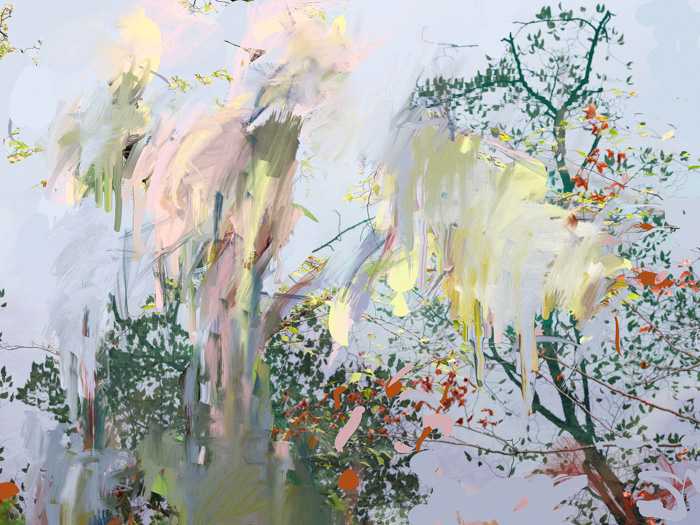
Finnish artist Sandra Kantanen approaches photography as a gateway to the imagined, rather than a tool for capturing objective reality. Her work reveals a unique, boundary-less technical philosophy, that pushes the medium beyond the constraints of the lens, challenging the viewer to question where the photograph ends and the painting begins.
At first glance, one might assume her ethereal landscapes are the result of mixed oil paints and traditional layering. In reality, these are photographs of natural environments-ranging from the forests of her native Finland to the mountains of Asia-subjected to profound digital and physical manipulation.
Born in Helsinki in 1974, Sandra Kantanen emerged as a key figure within the internationally celebrated Helsinki School of Photography. Her academic foundation was built at the Aalto University School of Arts, Design and Architecture in Helsinki, but the pivotal shift in her artistic trajectory occurred around the year 2000, when she moved to China as an exchange student.
Studying traditional Chinese landscape painting at the Central Academy of Fine Arts in Beijing, Kantanen became deeply influenced by Eastern philosophy. She was struck by how ancient masters did not aim to document the landscape, but to idealize and sublimate it.
During her travels through China's sacred mountains, she witnessed the stark tension between the pristine, spiritualized nature depicted in ancient silk scrolls and the harsh realities of modern industrial pollution and tourism. This dissonance became the catalyst for her practice: a lifelong pursuit to capture an "impossible" landscape – a space existing somewhere between memory, myth, and optical distortion.
While pixel-distorted landscapes are her most famous signature, Kantanen's broader photographic practice is remarkably diverse. She does not rely on a single technical trick; rather, she experiments across different series, constantly redefining how a photographic image can behave:
The Smoke Works and Pixel Manipulation: In her most renowned series, Kantanen physically intervenes in nature before the shutter even clicks. By releasing colored smoke bombs into remote forests – such as those near her home in Hango, Finland-she creates a surreal, psychedelic atmosphere that disrupts the mundane scenery. She then takes these digital files and subjects them to deep manipulation: blurring horizons, stretching data, and manually forcing pixels to flow so that the photograph mimics the fluidity of liquid paint.
Botanical Studies and Scanners: Shifting away from vast landscapes and pixel-stretching entirely, her floral still lifes and botanical works explore organic decay up close. For these, she often utilizes large-scale formats, long exposures, or even flatbed scanners instead of traditional camera lenses. These methods evoke the rich, allegorical depth of Dutch Golden Age painting, focusing on the intimate textures and slow passage of time in nature.
By moving fluidly between physical staging, scanner art, straight capture, and digital distortion, Kantanen constantly destabilizes our perception of what a photograph can be.
Over a career spanning more than two decades, Sandra Kantanen has earned widespread international acclaim for her innovative contributions to contemporary visual arts.
Her work has been showcased globally, with major exhibitions at venues like the Purdy Hicks Gallery in London, Paris Photo, and a comprehensive retrospective at the Turku Art Museum.
Kantanen's influence is cemented by her inclusion in the permanent collections of some of the world's most respected institutions, including the J. Paul Getty Museum in Los Angeles, the Brooklyn Museum, the Los Angeles County Museum of Art (LACMA), and the Kiasma Museum of Contemporary Art in Helsinki. Her monographs, published by Hatje Cantz, serve as a testament to an artist who does not merely use technology, but bends it to the eternal service of beauty.