In Conversation with Chora Practice
Feature
Founders of a Lisbon-based decor studio on the art of listening to your inner self, importance of resilience and favorite places in the city
Maria Ivanova & Chora Practice · 2026-08-17
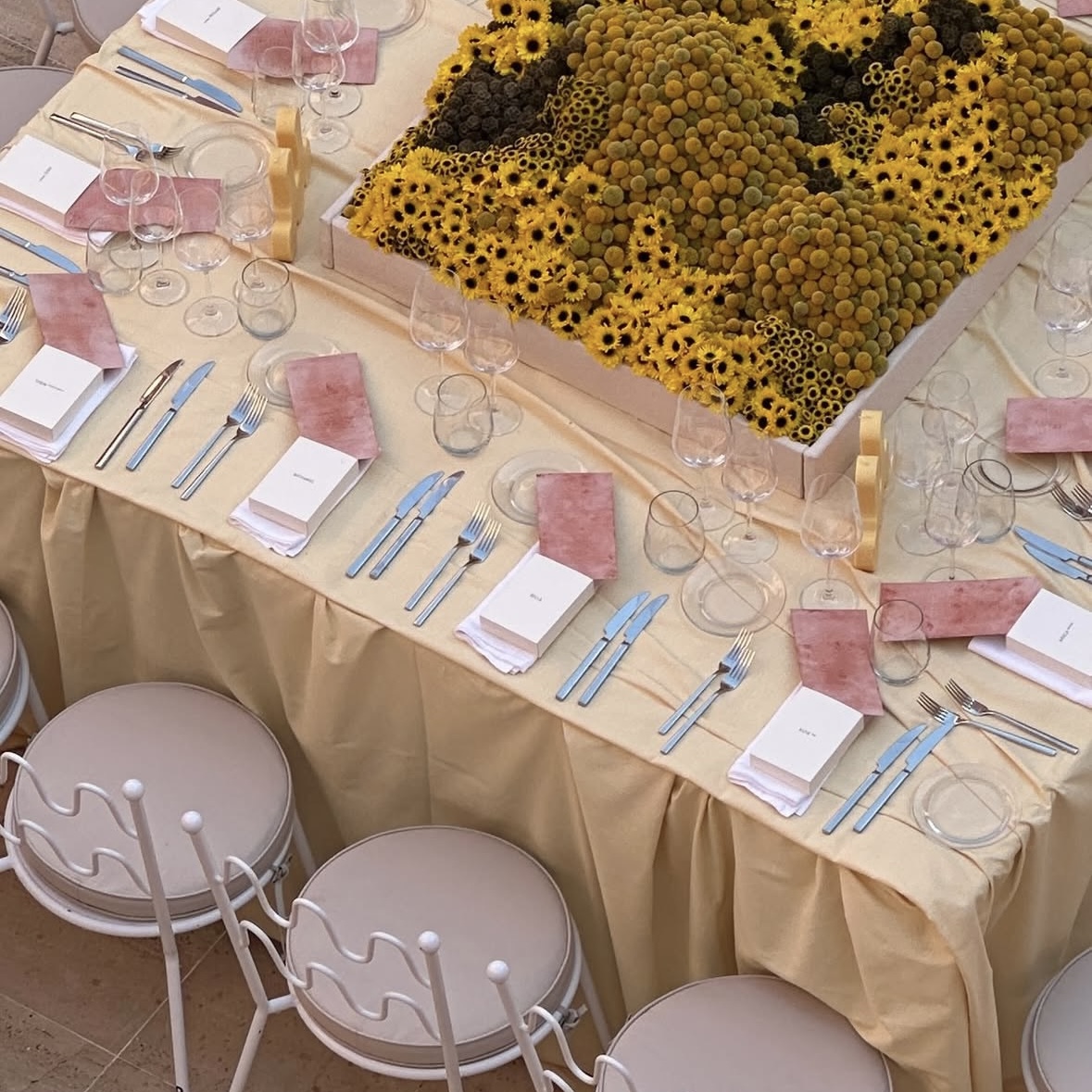
Creating your own project in a new country is always a bold step, where creative exploration intertwines closely with personal transformation. Elena Kuzmina and Xenia Bunina – founders of decor studio Chora Practice , based in Lisbon, Portugal – talk about how to turn any crisis into a point of growth, why there are no “uncreative” people in the world, and how to allow yourself to do what you genuinely love.
Chora is a creative practice. Could you tell us about your background?
Xenia: Most people who move to Portugal eventually start doing what they truly love – things they wanted to pursue in their ‘past life’ but were afraid to because of social expectations. The same happened to me.
After moving here, I started my own production company, working on photo and video advertising. That’s how Alena and I met. Later, I discovered Arco, a contemporary art school where we were taught not so much how to draw as how to look at the world through an artistic lens. I graduated this year, it were three years of intense study.
Elena, could you tell us about your experience?
Elena : I’m from a small town in Chuvashia and trained as an English and French teacher. But I was always drawn to art – cinema, architecture, painting, crafts - everything. Before moving, I took filmmaking courses because I dreamed of making films. When I found out that Ksenia had her own production company here, I wanted to join her.
I was so nervous about reaching out that my husband Mark contacted Ksenia for me, asking if I could come by, observe, and help out. In the end, Ksenia and I became very close. She’s an incredible person – always encouraging others and giving them space to express themselves. It was Ksenia who told me, ‘You should go to the art school.’ I was surprised: ‘Me? Are you serious?’ But I eventually enrolled too. It turned out to be an amazing experience: we learned to observe, create, and go through a complex, profound, almost philosophical process of discovery.
You mentioned that after moving to Portugal, you felt a sense of freedom. What exactly contributes to that?
Xenia: The environment is completely different. I love my city and my country, but St. Petersburg is huge, while Lisbon has only around 600,000 people. Because there are fewer people and the overall atmosphere is more relaxed, everything feels calmer. If you’re not bothering anyone, people tend to support you. In an environment like this, it’s much easier to express yourself.
Does it also have to do with the relaxed atmosphere around you, as well as the fact that no one knows you and you’re free to try something new?
Xenia: I don’t know if Alena feels the same, but I had this thought. Immigration can be a very intense experience, no matter how prepared you are. For many immigrants, life feels divided into two periods – the life before and the new one. If you’re starting over, why repeat what you’ve just lived through when you have the chance to begin doing what you genuinely want?
That’s a powerful thought. We often arrive at positive change by overcoming difficult experiences.
Let’s talk about your decoration studio. What exactly do you do, and what are your main areas of focus?
Xenia : Our main focus is textile decor for premium weddings. Initially, we decorated restaurants, creating temporary seasonal installations for Christmas or summer. Then we did our first wedding project and thought, ‘Oh, this is actually such a great field!’
Why did you decide to focus on textile design?
Elena : I think we simply aren’t afraid of challenges. We dive headfirst into every project and figure things out along the way. As artists, we see fabric simply as the medium that feels right for this particular stage. We’re not attached to the idea of always creating textile arches.
Xenia : I think it was more Alena’s initiative. She knows how to sew, genuinely loves fabrics, and has a deep understanding of the material.
At some point, we started receiving requests for fabric installations and realized we had found an open niche. It was a combination of a rational business approach and genuine personal interest. And although installing huge arches is physically demanding, fabric turned out to be the easiest material for us to work with because we understand it so well.
How did you choose the name Chora? Is it connected to philosophy?
Xenia: It was a beautiful sunny day – I think it was August – and we were sitting in the stunning Estrela Garden brainstorming. There were three of us at the time, and we had already been trying to come up with a name for about a month.
Then we came across Plato’s concept of Chora. In his philosophy, it refers to a primordial space – ‘space before everything’ – where matter comes into being. We found that idea very inspiring, especially because our initial concept was multisensory decor.
Then we had to decide on the format. Words like ‘studio’ or ‘bureau’ were already taken, and that’s when we came up with ‘practice’. We thought, ‘Wait, this sounds like an art practice! That’s perfect.’ And that’s how Chora Practice was born.
Six months later, we finally decided to find out what Chora meant in Portuguese – we hadn’t actually checked. It turned out to be the imperative form of the verb chorar, meaning ‘cry'.
Let’s talk a little about the technical side. What does the installation process look like? Do you do everything yourselves or mainly oversee the process?
Elena : We mostly do everything ourselves.
Xenia : It depends on the project. When we created a tent for Tales [Wedding Planner], we had a team from Back UP Rentals. After a short briefing, they created an incredible draping installation very quickly. Our decorations aren’t that large-scale yet, so the two of us can handle quite a lot ourselves.
The events industry is full of unexpected situations. How do you deal with crises on site?
Elena : Something always goes wrong at weddings. The main thing is to stay calm and be prepared.
Xenia : We always bring extra fabric. We try to anticipate potential problems in advance – what obstacles can occur for florists, organizers, and transportation. We think through as many possible scenarios as we can, come up with solutions, and prepare for them.
How do you deal with crises and creative burnout? What helps you recover and move forward when things get difficult?
Elena : Crises definitely happen. When I’m exhausted, I go for a walk in the forest. Nature inspires, relaxes, and recharges me enormously. I see problems as a completely normal part of the process. In fact, I’m even grateful for them because they mean we’re actively searching, facing challenges, and growing.”
Xenia : “I believe every business is essentially a journey from one crisis to the next. It’s not a burden – it’s simply part of reality. You need to be prepared for it and understand that every crisis is an opportunity. Things are going incredibly well for us now, and we’re very happy, but we know another difficult period will eventually come. And when it does, we’ll get through it and come out stronger.
Yes, it’s difficult and frustrating. But if something frustrates you so much that you want to cry, that probably means you’re just one step away from a breakthrough. Art school taught me that if you don’t move toward that resistance, you lose the opportunity. So: breathe in, breathe out, and solve the problem.
How would you explain a life filled with creativity to someone who isn’t connected to the creative world? How you experience and perceive the world?
Xenia : “Honestly, I don’t know – I’ve never been on the other side. I don’t believe people are divided into ‘creative’ and ‘non-creative’.
When someone says, ‘You’re creative people, but I’m more down-to-earth,’ I’m convinced that they’re suppressing something in themselves. For whatever reason – shame, fear, or social conditioning – they don’t allow themselves to recognize the artist within.
I truly believe we’re all creators to some degree. And if someone reading this thinks, ‘No, that definitely isn’t me,’ I’d suggest simply opening yourself up to the world a little more. There is definitely something inside you.
How would you suggest people reconnect with that creative part of themselves?
Xenia : There’s a practice called "Impulse". For instance, you’re walking down the street and suddenly feel like picking up a leaf or photographing a particular building. Your inner critic immediately says, ‘Why? Nobody needs this. We’re late. Please stop doing something pointless.
But that little impulse is exactly what your mind is telling you to ignore. If you listen to this impulse once, then again and again, the world gradually becomes richer – and you learn more about yourself, what you genuinely like, and what you really want to do.
The important thing is to hear that voice saying, ‘This is pointless,’ and answer: ‘Great. I’m going to do something pointless.’ That helped me enormously. It’s actually what led me to art school, because at first, studying art felt completely pointless.
Elena, do you have your own way of unlocking that creative part of yourself?
Elena: I’m a very slow person, so observation helps me a lot. I love immersing myself in the process – looking at a tree, feeling the wind. Simply observing yourself and the world around you can reveal a lot.
What is your favorite place in Lisbon, somewhere you always want to return to?
Elena : Probably the Gulbenkian Garden. It’s an incredible park and museum. It’s right in the city, but once you enter, it feels like you’re somewhere completely different. It’s a beautiful combination of nature, architecture, and art. You walk in and suddenly find yourself in your own little world. You can breathe out.
Xenia : For me, besides Gulbenkian, it’s probably Cabo Espichel. It has this incredible lighthouse and is considered by the Portuguese to be one of the westernmost points of Europe. I also love the café at Museu Albuquerque, and MACAM – Museu de Arte Contemporânea Armando Martins – has a wonderful café too. They’re all affordable but incredibly stylish. Museums often have amazing cafés.
What has been your most inspiring trip?
Xenia : I’ve just come back from New York, where my husband and I got married, so that’s definitely my strongest impression at the moment. But I think every journey is inspiring in its own way.
Elena : Recently, it was my solo trip to Porto. I visited the Serralves Museum of Contemporary Art, explored Álvaro Siza’s architecture, and absolutely loved it. The fact that I went alone also made it a special experience.
Finally, what is the one piece of advice you would give every reader?
Elena : Keep doing what you genuinely love. Despite your inner limitations, look deeply within yourself, listen to your true desires, and simply give yourself permission to pursue them.
Xenia : The main lesson I took from art school is: ‘Experience resistance.’ If you feel resistance toward something, you should move toward it. It means there’s a huge amount of energy hidden there. Don’t ignore or suppress it – look at it more closely.